Choosing the Right Grooming Cut for Your Dog's Coat
A successful dog haircut balances visual appeal with physiological necessity, because different canine coat types respond to clippers in fundamentally different ways. Single-coated breeds with continuously growing hair, such as poodles and various terriers, rely on routine clipping to prevent severe matting and maintain skin health. Double-coated working breeds, by contrast, possess a dense undercoat paired with tough guard hairs designed to insulate against both cold and radiant heat. Shaving a double coat can permanently alter its texture and disrupt temperature regulation, making proper style selection critical for long-term comfort.
When owners evaluate styling options, lifestyle factors should take priority over aesthetic trends. Active outdoor companions who spend hours running through fields, swimming, or navigating brush generally thrive with shorter, utilitarian trims that resist burrs and dry rapidly after outdoor play. Dogs living primarily indoors or spending calm days in conditioned spaces can easily manage fuller scissored profiles, provided owners commit to thorough daily line-brushing. The best haircut is always the one that matches the realistic amount of hands-on coat upkeep an owner can sustain between salon appointments.
Professional groomers generally view haircut categories through functional lengths, ranging from uniform utility cuts to scissored profile trims. Terminology can vary widely between styling shops, meaning that an ambiguous request like a puppy trim might produce a three-inch fluff in one facility and a half-inch strip in another. Understanding the mechanical basics of clipper guard combs, blade numbers, and scissor thinning helps owners articulate their goals clearly. This clarity eliminates surprise results and ensures the dog's coat remains comfortable, clean, and properly protected throughout the changing seasons.
Popular Miniature Poodle Hairstyles and Profile Clips
Miniature poodles possess an exceptionally versatile, curly coat that serves as the canvas for some of the most enduring styles in canine grooming history. Among the most popular miniature poodle hairstyles is the classic teddy bear trim, which features rounded legs, a contoured body clipped to moderate length, and a soft, spherical head shape. This style softens the breed's naturally sharp facial angles, giving adult dogs a cuddly, juvenile appearance that pet owners adore. Because curly hair traps shed undercoat readily, daily comb-outs remain essential to keep this plush outline free from tight surface tangles.
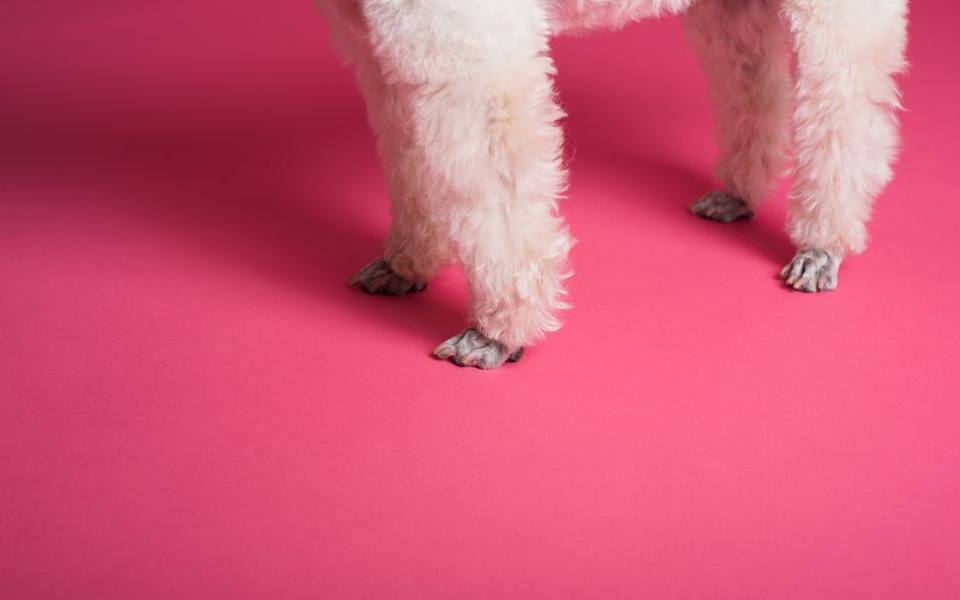
Another widely requested option is the Miami or bikini clip, which pairs a short, uniform body length with distinct pompons left over the ankles and the tip of the tail. The face and base of the tail are cleanly shaved with a close blade, making it an exceptionally clean and low-maintenance choice for everyday living. Owners often appreciate how the shaved muzzle reduces food residue and moisture accumulation after meals, while the leg pompons retain distinctive breed character without gathering debris along muddy walkways.
For owners desiring traditional elegance, variations of the modern clip or tailored lamb cut offer refined, balanced proportions. The lamb trim maintains a smooth, medium-length body while leaving the legs fuller and gently blended into the torso, accompanied by a modest topknot and shaved throat. Unlike dramatic historical show patterns, these practical interpretations preserve curly poodle identity while eliminating hours of daily table maintenance. Regular visits to walk-in dog washes between full haircut appointments can help keep these scissored shapes crisp, clean, and completely detangled.
Smart and Manageable Poodle Cuts for Summer
Rising temperatures and outdoor water activities prompt many pet parents to reevaluate coat length, searching for effective poodle cuts for summer. While shaving down to bare skin is never recommended due to sunburn risks and insect exposure, reducing overall coat volume significantly eases warm-weather maintenance. The utility or kennel trim remains a standard choice, utilizing a longer clipper guard—typically leaving a quarter to a half inch of dense curl—to provide skin protection while facilitating rapid drying after backyard swimming or lake adventures.
Choosing functional poodle haircuts for summer also means addressing dirt accumulation from dusty trails and humid lawns. Shaving the feet cleanly, an option known as clean feet or petti-feet, prevents damp grass seed, mud clods, and foxtails from burying deep into paw pads and webbing. Similarly, trimming the ear leather slightly shorter reduces heat entrapment inside the ear canal, promoting healthy airflow and lowering the likelihood of moisture-driven bacterial or yeast infections common among active swimming water dogs.
Summer maintenance is substantially simplified when curly coats dry quickly without developing severe moisture mats near the skin. When wet curls air-dry without brushing, they naturally tighten into dense knots that resist basic slicker brushes and pull painfully against tender hide. By keeping the body contour short and clean throughout the hot months, owners can rinse and towel-dry their companions frequently without dedicating hours to mechanical blowouts. A lighter summer clip ensures active dogs stay comfortable and odor-free from late spring until autumn arrives.
The Lion Cut for Dogs and Show Ring Adaptations
The lion haircut for dog breeds is perhaps the most recognizable silhouette in the entire grooming industry, defined by a voluminous mane and bare hindquarters. Historically developed for working water retrievers, the pattern left dense hair over the vital organs and joint capsules for thermal protection in freezing ponds while stripping the hind legs to reduce swimming drag. Today, the lion cut on a poodle is most commonly observed in competitive conformation rings, where intricate variations like the Continental and English Saddle clips command exceptional technical scissoring skill.
Outside the show ring, pet versions of the lion cut have gained a loyal following among owners of various breeds who appreciate its bold visual flair. When executed as a modified pet style, a lion cut for poodles features a comfortably clipped torso from the last rib back, bare thighs, small ankle bracelets, and a rounded, hand-scissored chest jacket. This dramatic contrast creates a regal look that stays surprisingly clean around the hips and sanitary areas, though the lush chest puff still demands regular comb-throughs to avoid dense internal tangling.
Executing this silhouette on non-poodle breeds requires careful consideration of coat structure and natural skin sensitivity. While single-coated longhaired breeds can tolerate the transition relatively well, applying an extreme lion pattern to double-coated breeds can yield patchy regrowth and sunburn vulnerabilities on the exposed rear section. Groomers generally advise against stripping back dense double coats unless extreme medical or matting issues leave no other alternative. When requested appropriately, the pet lion pattern remains a striking celebration of classic canine styling tradition.
Everyday Shorkie Haircut Styles and Maintenance
The Shorkie, a deliberate cross between a Shih Tzu and a Yorkshire Terrier, inherits a soft, fine hair coat that blends silky strands with variable undercoat density. Because their texture ranges from straight and glossy to soft and wavy, popular shorkie haircut styles generally focus on reducing daily grooming friction while retaining an endearing, expressive expression. Left untouched, the hair around a Shorkie's eyes and muzzle can quickly obscure vision and collect meal debris, making routine facial shaping and perimeter neatening an absolute household necessity.
Among the most popular shorkie hairstyles is the classic teddy bear trim, which utilizes clipper comb attachments to leave roughly three-quarters of an inch across the torso. The legs are scissored into balanced tubes that complement their compact stature, while the head is carefully rounded into a soft, plush frame. This approach softens the sharp texture differences often found along the spine, creating a uniform look that handles sweater wear during cooler seasons without forming abrasive friction knots in armpit creases.
Another practical alternative for active households is the modified puppy cut, which takes the body down shorter while leaving the tail plume and ear fringes slightly longer for character. Many owners prefer this trim because it significantly cuts down on bathing time and speeds up post-walk cleanups after damp weather. Utilizing local self-service dog wash stations makes maintaining these hybrid coats affordable and straightforward, allowing owners to wash and blow out fine hair before minor mats have the opportunity to tighten against the skin.
Understanding the Pomeranian Haircut and Puppy Trims
The double coat of a Pomeranian serves as natural climate control, insulating against cold winter air and deflecting intense summer radiant heat. Consequently, approaching a pomeranian hair cut requires a conservative philosophy centered on scissor work rather than electric clipper blades. Shaving a Pomeranian down to the skin can cause post-clipping alopecia, an unpredictable condition where guard hairs fail to regenerate, leaving patchy, woolly undercoat exposed to elements. A proper breed trim should always celebrate natural coat density without compromising underlying follicular health.
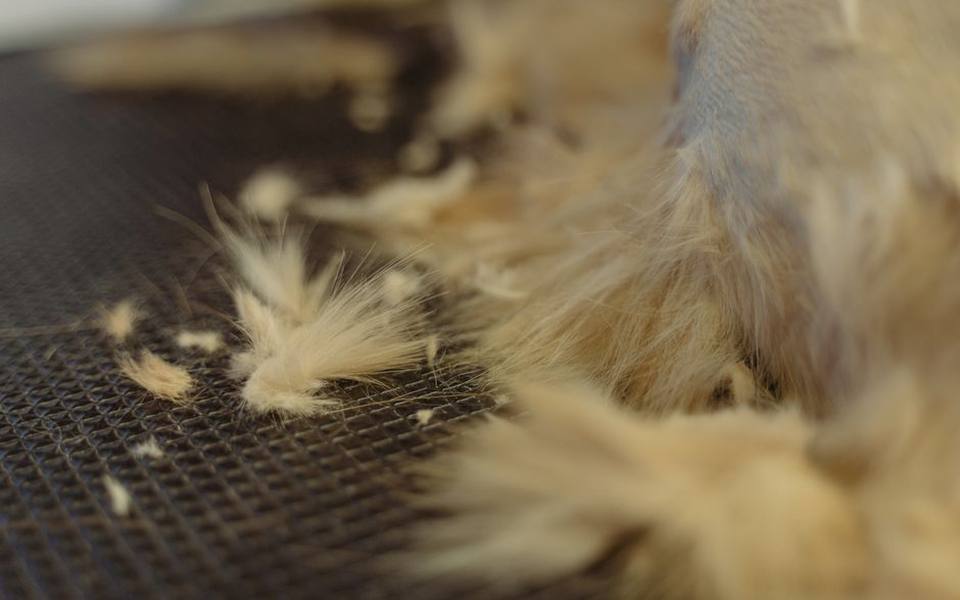
The most widespread styling option requested by pet parents is the scissored puppy cut for pomeranian companions, often referred to as a silhouette or outline trim. Rather than shaving the dog, a stylist uses curved hand shears to lightly trim stray guard hairs, creating a neat, rounded orb that mimics a plush juvenile coat. This technique removes ragged ends, shapes the chest tuck-up, and contours the hindquarters while leaving ample length to protect the delicate skin underneath from environmental abrasion and ultraviolet rays.
Managing the perimeter of a Pomeranian also involves detailing the feet, hocks, and sanitary region to maintain household cleanliness. Trimming excess slipper fur between the footpads provides much better traction on hardwood floors and prevents dirt from migrating indoors after outdoor play. Scissoring the heavy fur beneath the tail into a tidy apron ensures sanitary hygiene without stripping away the iconic high-set plume resting across the back. Routine brushing down to the skin remains the true foundation for keeping this magnificent coat lofty and buoyant.
When bathing a Pomeranian prior to scissoring, thorough drying with high-velocity air is required to separate dense undercoat fibers fully. If the coat is clipped while damp or unevenly brushed, the finished silhouette will inevitably look ragged and irregular once the fur settles naturally. Investing time in complete wash-and-fluff preparation produces that velvety, compact finish that makes the breed's silhouette instantly recognizable wherever they walk.
Outline Trimming for a Miniature Australian Shepherd
Miniature Australian Shepherds possess an athletic, weather-resistant double coat engineered to withstand rain, mud, and rugged terrain. Just like their standard-sized ancestors, their fur consists of a dense, water-repellent undercoat sheltered by longer, coarser guard hairs along the back and neck. As a general rule, an everyday mini australian shepherd haircut should never involve shaving down the body, as clippers ruin the natural insulating balance, alter coat texture permanently, and leave the skin defenseless against harsh seasonal weather.
Instead of heavy clipping, the ideal mini aussie haircut is technically an outline or silhouette trim executed entirely with shears and thinning tools. Stylists focus on cleaning up the extended feathering behind the front legs, shaping the voluminous breeches or pants on the rear thighs, and tidying the underline along the belly. Removing excessive fringe from these high-friction zones prevents burrs from embedding into deep mats while preserving the dog's natural working silhouette and water-shedding performance.
Foot and pastern detailing is an essential aspect of maintaining an active Miniature Australian Shepherd. Long tufts of fur sprouting between toe pads collect mud pellets and ice balls in winter, which can make walking painful and cause dogs to chew their feet raw. Trimming the hocks close to the leg bone and rounding the feet into compact, cat-like paws creates an athletic profile that tracks significantly less debris into the house after running along wet field paths.
Undercoat removal, often termed deshedding, forms the primary service these herding dogs actually require rather than mechanical cutting. Utilizing dedicated rakes and high-velocity blasters during seasonal shed cycles pulls loose undercoat before it compacts into solid felted sheets. Keeping up with dead undercoat expulsion allows natural air circulation next to the skin, keeping the dog cool in summer and warm in winter without sacrificing their handsome, protective double coat.
Pre-Cut Bathing and Prep in Self-Serve Wash Facilities
High-quality grooming outcomes depend almost entirely on the thoroughness of the preliminary bath and drying process. Attempting to cut or scissor a coat that harbors grit, grease, or lingering tangles inevitably dulls expensive grooming shears and produces uneven, choppy results. Sand and fine dust particles act like microscopic abrasives against clipper blades, pulling hair painfully and heating metal surfaces rapidly. Clean, fully separated hair shafts stand upright under comb guides, permitting smooth passes and crisp lines.
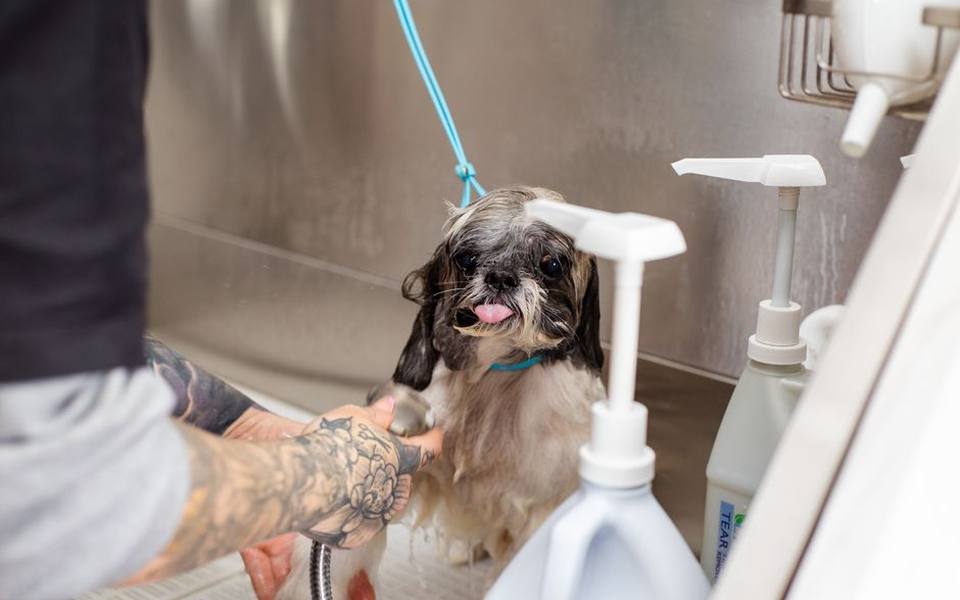
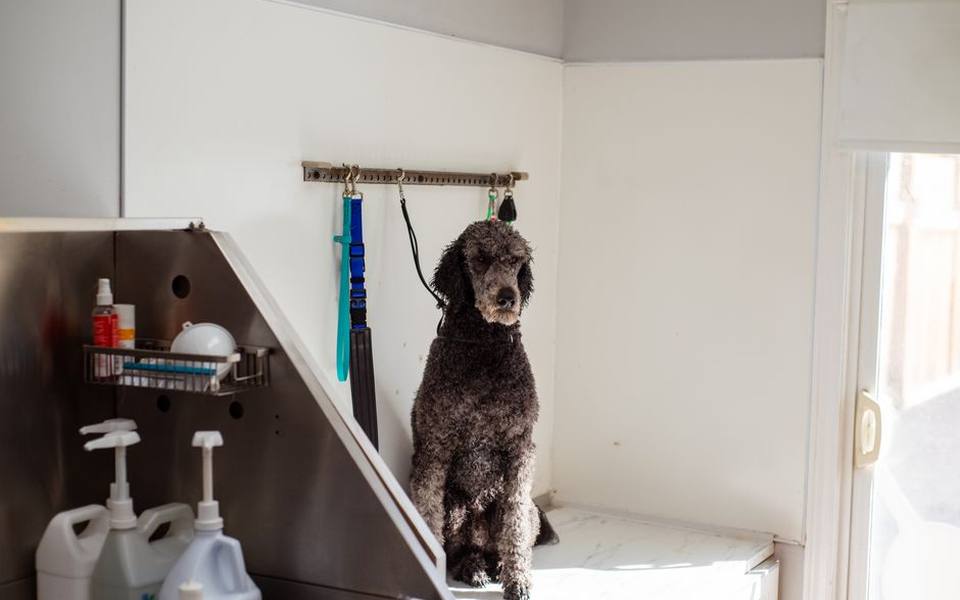
Many pet parents prefer utilizing specialized self-serve dog wash stations to prepare their animals before attempting trimming work at home. These dedicated facilities provide waist-high tubs, professional spray nozzles with constant warm water, and commercial-grade shampoos that penetrate thick fur far more effectively than home bathtubs. Bathing a large or active breed at elevated stations eliminates back strain and keeps the heavy mess of wet hair out of domestic household plumbing systems.
High-velocity forced-air dryers found in dedicated wash stations play an invaluable role in coat preparation. Unlike hand-held human hair dryers that rely on high heat to evaporate moisture, professional blasters use concentrated mechanical air pressure to strip water and blast loose undercoat directly out of the follicle bed. This process straightens curly locks, fluffs dense double coats, and exposes hidden skin mats before scissors ever touch the animal. Properly blown-out fur cuts cleanly, saving substantial trimming time.
Essential Hygiene Trims, Paw Care, and Line Work
Regardless of the overarching haircut style chosen, every companion animal benefits from routine maintenance around sanitary margins and paw structures. A proper sanitary trim involves gently clearing hair from the lower abdomen, groin, and anal perimeter using a specialized, fine-toothed clipper blade. Removing excess length in these sensitive zones prevents urine staining and fecal accumulation, which can otherwise cause severe skin irritation, unpleasant domestic odors, and painful secondary dermatitis.
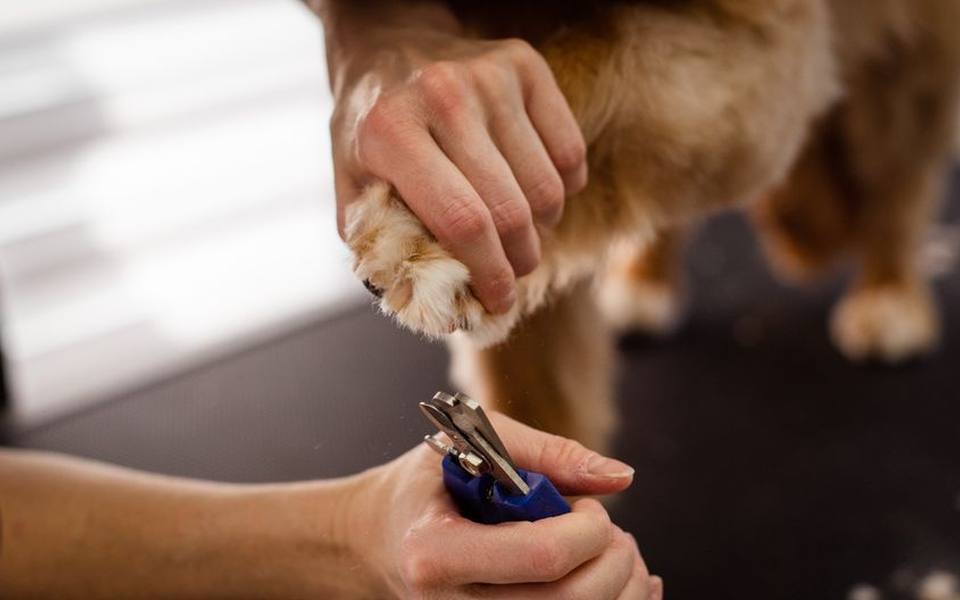
Paw detailing goes far beyond aesthetics, directly impacting canine posture and orthopedic health over time. Overgrown hair between pads acts like slippery socks on smooth indoor surfaces, causing older dogs or energetic puppies to slip and strain joints during movement. In addition, trimming fur flush with pads exposes the nails clearly, allowing owners to conduct regular dog nail trimming and grinding without accidentally catching long strands in rotating sanding drums or clipper jaws.
Regular attention to face and ear margins finishes the grooming session and safeguards everyday wellness. Trimming stray hair away from eye corners eliminates crusted tear buildup and minimizes corneal irritation caused by wayward strands brushing against the eyeball. Thinning the heavy fur beneath the ear leather encourages vital air circulation inside the canal, especially after baths. Clean lines along the lips, chin, and throat complete a balanced trim that stays neat for weeks between major salon overhauls.
Communicating with Groomers and Managing Coat Upkeep
Bridging the gap between an owner's aesthetic vision and a dog's coat reality requires honest, clear communication at salon check-in. Vague terminology like puppy cut, teddy bear trim, or short all over can mean completely different lengths depending on the groomer's training and geographic background. Bringing two or three visual reference photos on your phone helps establish a shared baseline for body length, head shape, ear fullness, and tail styling before work begins.
Owners must also welcome professional feedback regarding the present condition of the dog's coat before insisting on specific lengths. If deep, pelted matting has formed near the skin due to missed brushing sessions, humane considerations necessitate shaving beneath the knots rather than attempting painful dematting procedures. A reputable groomer will clearly assess what length is achievable without hurting the animal and outline a practical home care strategy to rebuild coat length safely over future appointments.
Sustaining any tailored haircut between salon visits requires establishing a predictable home brushing routine tailored to the specific hair texture. Tools should match the breed: firm slicker brushes paired with metal greyhound combs for poodles and doodles, undercoat rakes for double-coated breeds, and soft pin brushes for silky drop coats. Consistent, gentle grooming sessions at home build positive handling habits, transforming table sessions from stressful ordeals into quiet, cooperative bonding routines.
Published 2026-09-21 · reviewed with each rebuild, last September 2026.
Find self-serve dog washes near you
The directory lists 2,264 self-serve dog washes by state and city — pick your state or use the “Near me” button in the header.
More guides
-
 Money
MoneyUnderstanding the Costs of Grooming and Washing Your Dog
-
 Service
Canine Scent Gland Care: Symptoms, DIY Steps, and Professional Costs
-
 Money
MoneyDog Grooming Cost Breakdown: Salons, Mobile Vans, and Retail Chains
-
 Service
Dog Anal Gland Expression: How It Works, When It Is Needed, and Typical Costs
-
 Owning
Essential Dog Grooming Tools: Choosing Clippers, Shears, and Maintaining Blades
-
 Money
MoneyDog Teeth Cleaning Costs: Vet Anesthesia vs. Non-Anesthetic Options
-
 Service
How to Choose the Best Local Dog Groomer: What to Look For
-
 Service
Self-Service Dog Wash Guide: Locations, Pricing, and How It Works
-
 Owning
Complete Dog Anal Gland Care: How to Express, Symptoms, and Safe Techniques
-
 Service
Professional Dog Grooming and Self-Wash Stations: Comparing Costs, Services, and Formats
-
 Owning
Dog Nail Trimming and Grinding Guide: Clippers, Rotary Tools, and Safe At-Home Care
-
 Service
Popular Dog Haircut Styles: Breed Cuts, Teddy Bear Trims, and Styling Rules
-
 Owning
Managing Dog Itchy Skin and Fleas: Medicated Baths, Shampoos, and Remedies
-
 Service
Complete Cat Grooming Guide: Bathing, Haircuts, Nail Trimming, and Mobile Care
-
 Owning
Dog Ear Cleaning and Flushing Solutions: Preventing Wax Build-Up and Infections
-
 Owning
Dog Anal Gland Care: Expression, Swollen Glands, and Hygiene Solutions
-
 Owning
Dog Blow Drying, Coat Coloring, and Waterless Grooming Essentials
-
 Owning
Essential Grooming Tools: Brushes, De-Matting, Odor Neutralizers, and Paw Care
-
 Owning
Canine Dental Hygiene Guide: Toothbrushes, Powders, and Tartar Control
-
 Owning
Complete Guide to Dog Training: Methods, Equipment, Classes, and Costs
-
 Owning
Ultimate Guide to Dog Haircut Styles by Breed: Puppy Cuts, Teddy Bear, and Lion Clips
-
 Owning
How to Treat Dog Itchy Skin and Allergies: Medications, Shampoos, and Home Remedies
-
 Safety
How to Trim Dog Nails Safely: Clippers vs Grinders and Techniques
-
 Service
Professional Dog Grooming Services: Costs, Salons, and At-Home Options
-
 Owning
Dog Dental Care Guide: Toothbrushes, Powders, and At-Home Cleaning
-
 Safety
Dog Ear Cleaning Solutions, Wax Buildup, and Infection Care Guide
-
 Owning
Choosing the Right Dog Shampoo for Dry Skin, Dandruff, Fleas, and Ticks
-
 Owning
Self-Serve Dog Wash Stations and Home Bathing Setup Guide
-
 Buying
Essential Professional Grooming Tools, Clippers, and Blade Care
-
 Owning
Dog Nail Trimming, Grinding, Polish, and Safe Hair Dye: A Practical Guide
-
 Service
Cat Grooming and Styling: Lion Cuts, Bathing, and Coat Care
-
 Owning
Dog Ear Care and Skunk Odor Removal: Cleaning, Wax, and Emergency Deodorizing
-
 Safety
Dog Flea Baths and Medicated Shampoos: OTC and Prescription Remedies
-
 Owning
Complete Guide to Raw Dog Food Nutrition and Diets
-
 Owning
Dog Birthday Cakes, Safe Treats, and Celebration Guide
-
 Service
Hiring a Dog Walker: Services, Rates, and Agency Options
-
 Service
Dog Breed Haircuts, Styling, and Coat Maintenance Guide