Selecting the Right Professional Dog Clippers
Professional dog clippers differ significantly from standard human hair trimmers in motor power, blade torque, and thermal dissipation. A dense canine double coat or a matted curly fleece generates enormous resistance that quickly stalls low-torque consumer motors. Investing in a high-grade grooming clipper typically means choosing between rotary, pivot, and magnetic motor architectures. Rotary motors dominate professional salons because they offer variable speed settings, deliver consistent drive power across heavy mats, and stay relatively cool during extended trimming sessions.
Weight balance and vibration reduction are essential considerations if you plan to groom for hours at a time. Heavy clippers strain wrist tendons, while high-vibration casings can numb your fingers and reduce your precision around delicate areas like the ears, pads, and sanitary regions. Many modern groomers transition to brushless motor designs because they eliminate carbon brush wear, produce less internal heat, and extend overall tool lifespan. Cordless models powered by lithium-ion cells now rival corded units for runtime, typically running for two hours on a single charge.
Blade compatibility is another foundational factor to confirm before purchasing any clipper body. The industry standard remains the detachable A5 blade drive system, which accepts snap-on steel and ceramic blades from dozens of specialty manufacturers. Opting for an A5-compatible body ensures that you can swap from a coarse skip-tooth blade used for bulk coat clearing to a fine-toothed finishing blade in seconds without changing your underlying mechanical setup.
Navigating Commercial Pet Groomer Suppliers
Sourcing your equipment from dedicated pet groomer suppliers rather than general online marketplaces offers major advantages in parts availability, authenticity, and warranty support. Commercial suppliers specialize in the durable hardware necessary for salon environments, stocking OEM drive levers, replacement hinges, motor carbon brushes, and high-tensile cords that big-box consumer retailers never carry. When an internal drive tip inevitably wears out, a specialized parts supplier keeps your investment working without requiring an entirely new tool.
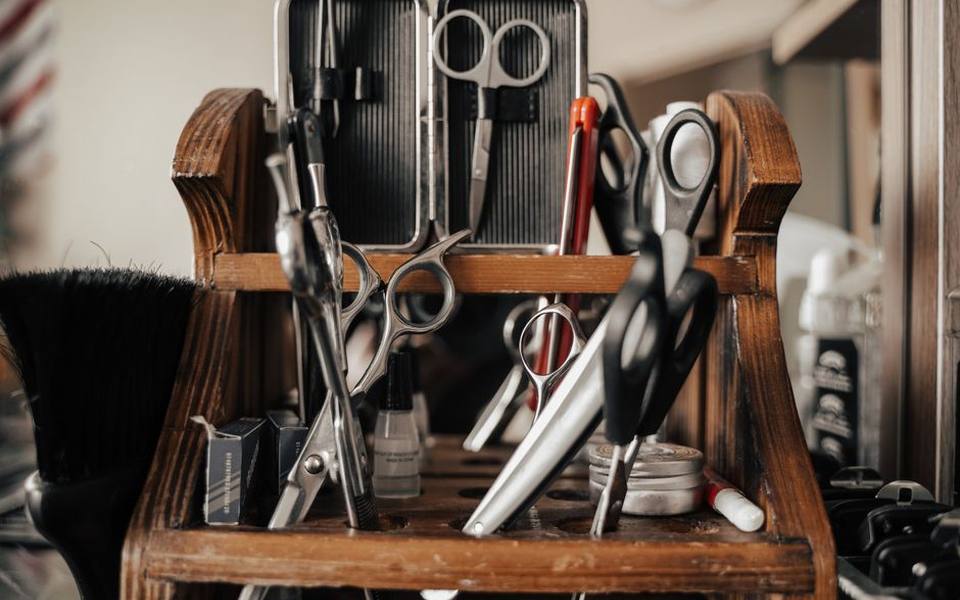
Wholesale pet distributors also provide access to specialized education and customer service teams who understand blade geometry, coat textures, and electrical safety standards. If you are uncertain whether a particular multi-speed clipper matches thick briard or poodle hair, a dedicated supplier representative can point you toward tested motor ratings. They also stock commercial-grade sanitizing solutions, cooling mists, and industrial-strength disinfectants formulated specifically to meet veterinary sanitation expectations.
Establishing an account with a reputable equipment supplier also simplifies regular maintenance cycles. Many trade distributors manage direct blade exchange programs, factory repairs, and certified warranty work on professional equipment. Instead of searching for an independent technician when your drive motor lags, you can ship tools directly to certified service centers that use calibrated factory test rigs and genuine replacement assemblies.
Vacuum Trimmers and Suction Attachment Systems
Vacuum grooming units and integrated dog hair trimmer vacuum systems have fundamentally changed the way high-volume groomers handle heavy shedding breeds. A professional dog clipper vac pairs a modified cutting head with an airtight extraction hose connected to a high-efficiency particulate air filtration canister. As the reciprocating blade shears through hair, negative air pressure instantly pulls the clippings down into the vacuum reservoir before the loose fur can settle into the room air or onto your workspace.
Beyond maintaining a clean salon floor, air suction improves cutting precision by continuously lifting hair perpendicular to the blade teeth. This suction effect allows the cutter to achieve uniform length across uneven coat textures with significantly fewer passes. The constant movement of high-velocity ambient air across the blade assembly also serves a vital cooling function. Clipper friction normally causes steel blades to heat up quickly, but continuous airflow draws off thermal buildup and reduces the risk of accidental friction burns against sensitive skin.
When evaluating a vacuum trimming system, motor noise and hose flexibility must take top priority. High-decibel shop vacuums trigger fear responses in nervous pets, creating unnecessary safety hazards on the grooming table. Purpose-built pet trimmer vacuums incorporate sound-baffling acoustic chambers and insulated turbines that reduce operating frequencies to gentle hums. Flexible, anti-static hoses are equally crucial; rigid tubing binds against your wrists, impairing the natural arc of your trimming strokes around paw pads and flank contours.
Deshedding Tools and Undercoat Management
Clippers should never serve as a shortcut for dealing with heavy shedding on double-coated breeds like Huskies, Shepherds, or Golden Retrievers. Shaving double coats disrupts their natural insulation, leading to coat funk, patchy regrowth, and compromised temperature regulation. Instead, groomers rely on specialized deshedding tools engineered to remove dead undercoat while leaving the healthy outer guard hairs completely intact. A well-designed stainless steel undercoat rake or curved shedding blade penetrates deeply to extract dense clumps without abrading sensitive epidermal layers.
Precision tools designed for long coats, such as a specialized long-hair deshedding tool, feature curved stainless steel teeth that bypass top guard hairs to reach trapped underfur. These fine-toothed extraction combs rely on precise spacing to grasp friction-locked dead hair while gliding past anchored follicles. Using smooth, steady strokes along the lay of the fur releases undercoat without scratching the dog or causing brush burn. Regular deshedding dramatically reduces household dander and keeps dense coats aerated to prevent localized moisture hot spots.
Before applying any deshedding edge, you should ensure the coat is thoroughly washed, conditioned, and completely dried using a high-velocity blow dryer. Running deshedding blades through a dirty, gritty coat dulls the micro-beveled teeth almost immediately and can painfully pull on unwashed tangles. Many owners like to prepare coats by visiting Self-Serve Dog Wash Stations to take advantage of elevated tubs and commercial force dryers before beginning precision undercoat work at home.
Recognizing Dull Blades and Cutting Friction
A sharp blade glides through a clean coat without resistance, leaving a crisp, velvety edge with zero drag. The earliest indicator that your cutting edge has degraded is a subtle change in resistance; the clipper begins to chew or fold hair rather than slicing cleanly through it. You may notice uneven tracks, jagged lines, or patches where the coat bends flat under the cutter. If a dog suddenly pulls away, flinches, or whines during a routine flank pass, dull teeth are likely catching and pinching delicate skin folds.
Excessive heat buildup is another unmistakable sign that your cutting surfaces have lost their original edge. As cutting surfaces dull, friction between the reciprocating cutter and the stationary comb plate increases exponentially. Even with regular lubrication, a dull steel blade can reach uncomfortably warm temperatures within three to four minutes of continuous running. Monitoring blade face temperatures with the inside of your wrist is an indispensable safety habit for anyone operating motorized shears.
Mechanical strain on your clipper motor also escalates as blade sharpness deteriorates. A dull blade forces the motor armature to draw higher electrical amperage to push through dense fiber, which causes the motor housing to warm up in your palm. If your clipper pitch drops to a lower, strained hum during standard passes, remove the blade immediately. Forcing dull blades through coats accelerates gear wear, drains battery packs prematurely, and risks painful skin irritations.
The Mechanics of Clipper Blade Sharpening
Restoring worn edge geometry requires specialized equipment; standard sharpening stones and casual kitchen sharpeners cannot properly grind pet grooming blades. Professional clipper blade sharpening relies on specialized horizontal grinding wheels known as flat-honing or hollow-grinding machines. These large aluminum or cast-iron wheels feature a microscopic convex taper across their surface. When a blade is held against the spinning disc with a precise magnetic holder, this subtle taper creates a hollow-ground hollow between the front tips and the rear heel.
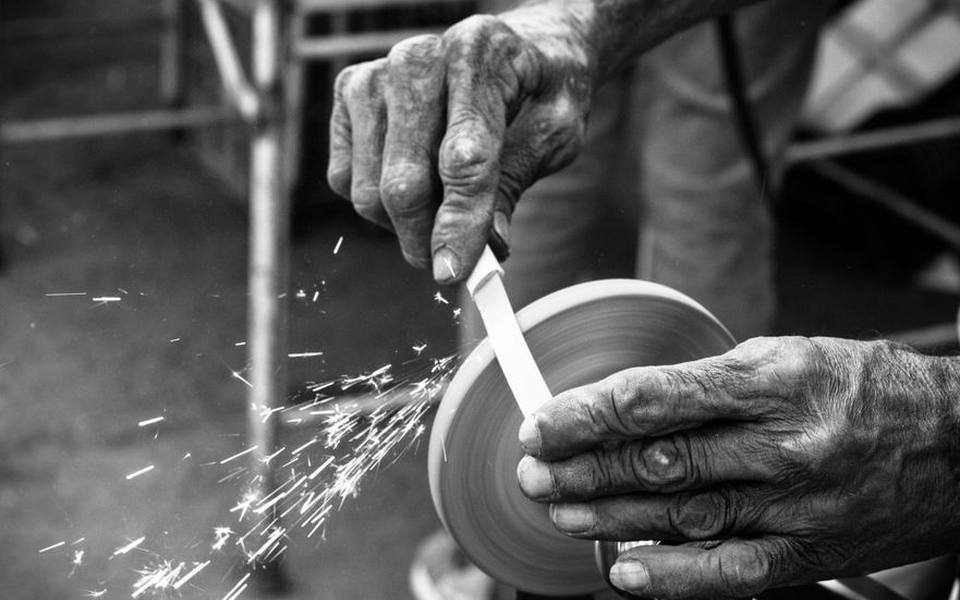
This intentional hollow grind ensures that only the extreme cutting tips of the stationary comb and moving cutter make direct contact under spring tension. If an inexperienced operator runs a blade across a completely flat bench stone, the entire mating surface flattens out. This creates massive frictional contact across the entire steel face, generating excessive heat and stalling clipper motors within seconds. Professional sharpeners use calibrated diamond compounds and aluminum oxide slurries to achieve smooth, mirror-like finishes that minimize metal-on-metal friction.
Reassembling a sharpened blade requires exact mechanical alignment. The spring tension socket must exert the proper foot-pounds of clamping force; too little tension causes the cutter to chatter and jam with hair, while too much tension creates drag that overheats the motor. The lateral clearance must also be aligned so the sharp corner teeth of the moving cutter cannot oscillate past the edge of the stationary comb, which would cause severe skin gouges.
Sharpening Systems Versus Professional Service Shops
Groomers frequently debate whether to invest in an in-house machine or ship their inventory to an off-site sharpening service. High-end barber clipper blade sharpeners and dedicated pet blade honing stations represent significant capital investments, typically running from several hundred to over a thousand dollars depending on the wheel diameter and motor specs. For a busy multi-station grooming business, having an on-site sharpener eliminates postal downtime and can pay for itself over time, but the equipment demands substantial practice to master.
Compact hand-cranked sharpeners or consumer-grade hair trimmer sharpener accessories sold online often promise quick fixes for dull teeth. In practice, these gadgets rarely deliver satisfactory results on grooming tools. The delicate micro-teeth on high-number blades, such as a #10, #30, or #40 surgical blade, require strict tolerances measured in thousandths of an inch. A handheld hair clipper sharpener easily misaligns tooth heights and rounds off square cutting edges, rendering expensive steel unrecoverable.
For pet owners and independent groomers with modest blade inventories, mailing blades to a certified mail-in sharpening professional remains the most cost-effective path. Professional services clean, hollow-hone, demagnetize, re-spring, and test-cut every blade on artificial fur or string to verify cutting performance before shipping them back. Rotating through two or three backup sets per size ensures that you always have razor-ready steel on hand while another set undergoes professional conditioning.
Daily Blade Care, Cleaning, and Lubrication
Consistent cleaning and lubrication habits double the operating lifespan of your blades and cut down dramatically on your sharpening costs. Hair fragments, dead skin cells, and dried bathing minerals quickly pack into the narrow channel beneath the cutter, lifting the cutting edges apart and creating drag. At the end of every grooming session, brush loose hair from between the teeth using a stiff nylon bristle brush, taking care never to use metal bristles that could nick the polished edges.
Flushing your blades with a professional wash solution dissolves gummy buildup and clears out trapped debris that brushing misses. Pouring blade wash into a shallow dish and dipping only the running teeth for five to ten seconds flushes out hair without soaking the motor housing. After running the wash, turn the clipper off, wipe the blade completely dry with a lint-free cloth, and inspect the mating surfaces for any signs of surface pitting or oxidation.
Lubrication must follow every cleaning cycle without exception. Place three drops of professional clipper oil across the front teeth while the unit runs, plus one drop on each rear glide rail where the cutter slides against the spring base. Never use vegetable oils, household multi-purpose sprays, or heavy motor oils; these substances break down under frictional heat, forming sticky varnishes that attract dust and seize mechanical linkages. High-grade mineral clipper oils are specifically formulated to run clean at high oscillating speeds without staining canine coats.
Grooming Tables, Safety Arms, and Ergonomics
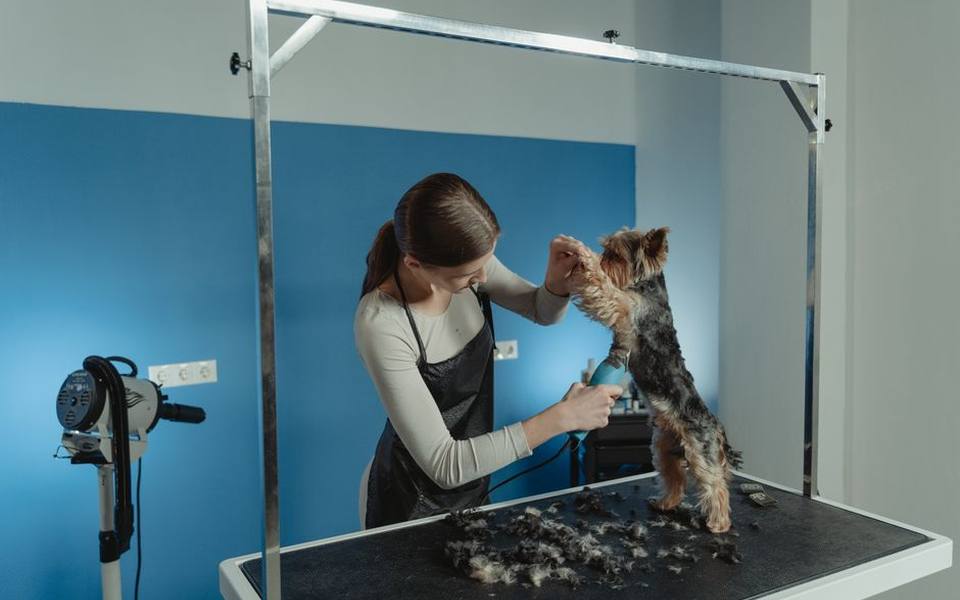
A stable grooming platform is just as vital as quality clippers for producing smooth trims and protecting both dog and groomer from accidental injury. Heavy hydraulic and electric grooming tables adjust smoothly across broad height ranges, allowing you to position dogs at natural elbow height without stooping over. When trimming feet, sanitary zones, or delicate facial contours, a rock-solid table that does not wobble or shake builds canine confidence, keeping four-legged clients calm and cooperative during detailed clipper passes.
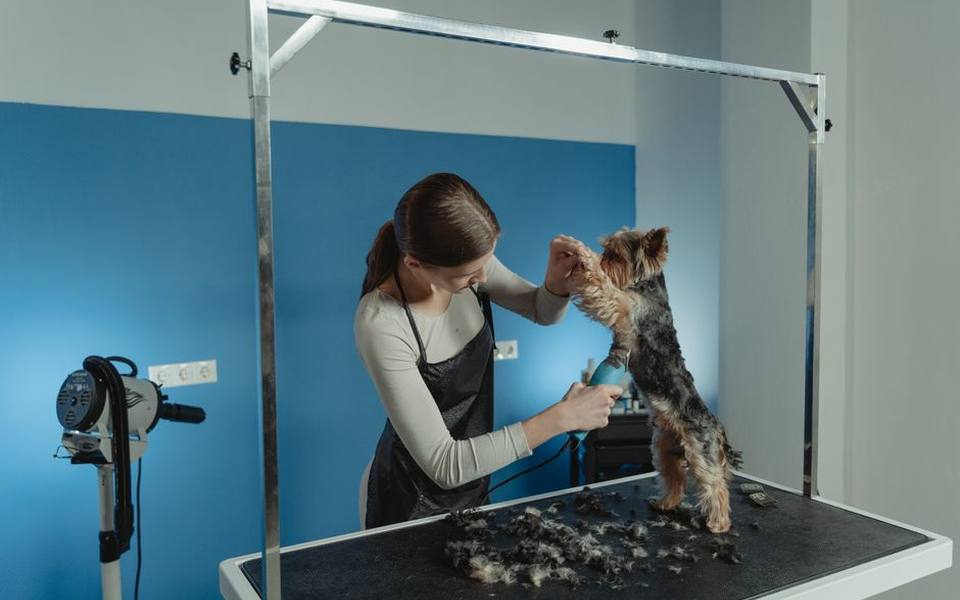
Non-slip tabletop surfaces made from pebble-textured rubber or ribbed polyvinyl prevent footing slippage that could startle an animal while sharp shears are in motion. Every table setup should include an adjustable overhead grooming arm equipped with a padded safety loop. Restraint loops should gently discourage stepping off the ledge without applying pressure to the trachea; pairing an overhead loop with a padded belly support prevents tired or senior dogs from sitting down unexpectedly while you work on hindquarters.
Maintaining your grooming equipment also involves caring for nail tools alongside your clippers. Dull trimmers crush paw nails painfully instead of slicing clean cross-sections. If you prefer to focus your table time on coat styling while seeking specialized nail maintenance elsewhere, exploring professional Dog Nail Clipping and Trimming Services provides a reliable alternative for nervous pets that resist home paw handling.
Bathing Preparation and Hygiene Workflows
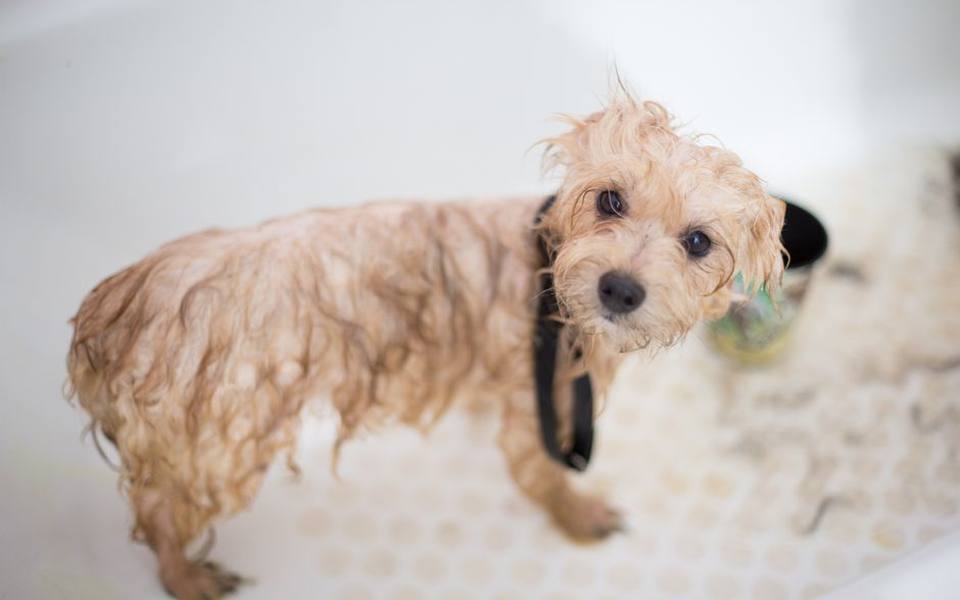
Never run precision clipper blades through a coat that has not been thoroughly washed and blown out. Sand, outdoor silt, and dried mud act like industrial sandpaper on delicate steel teeth, stripping the fine beveled edge off a fresh blade in a matter of seconds. Clean, conditioned, thoroughly dried hair separates easily, permitting clipper combs to slide effortlessly against the skin line for a uniform cut without snagging or pulling.
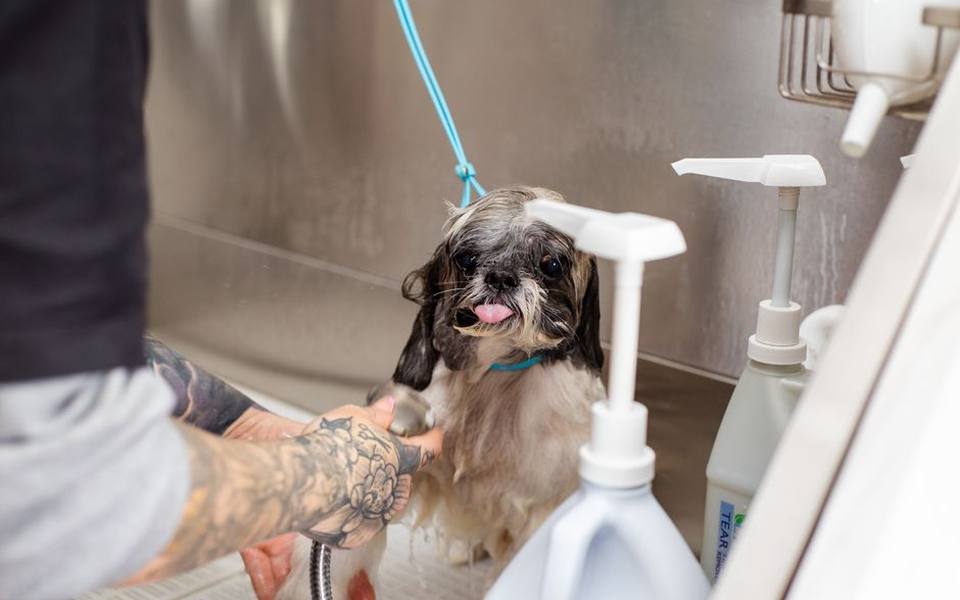
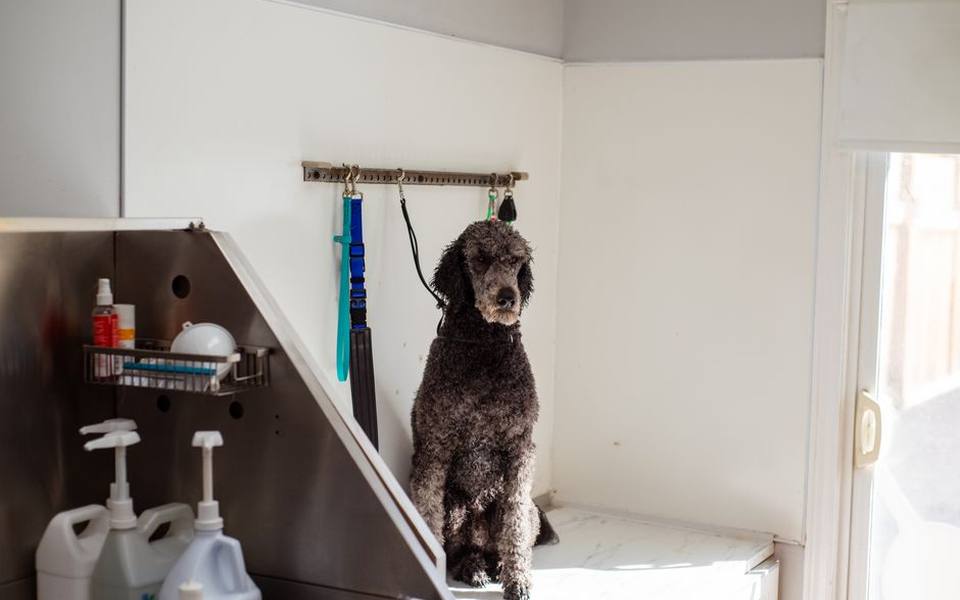
Establishing an efficient bathing routine protects your investment in expensive cutting gear. If you do not have dedicated plumbing, deep wash basins, or high-velocity warm air dryers at home, community facilities provide complete solutions. Finding local Self-Service Dog Wash Stations Near You gives you access to elevated stainless tubs, temperature-controlled sprayers, and specialty shampoos without the hassle of cleaning clogged residential drains afterward.
For owners balancing busy schedules, commercial facilities with flexible hours make preparation convenient. Opting for Walk-In Dog Washes allows you to handle deep cleansing baths and thorough velocity blowouts on your own timeline. Once the dog is washed, dried, and brushed down to the skin, returning to your home grooming table ensures your clippers, vacuum systems, and sharp blades perform at their highest mechanical potential.
Published 2026-09-21 · reviewed with each rebuild, last September 2026.
Find self-serve dog washes near you
The directory lists 2,264 self-serve dog washes by state and city — pick your state or use the “Near me” button in the header.
More guides
-
 Money
MoneyUnderstanding the Costs of Grooming and Washing Your Dog
-
 Service
Canine Scent Gland Care: Symptoms, DIY Steps, and Professional Costs
-
 Money
MoneyDog Grooming Cost Breakdown: Salons, Mobile Vans, and Retail Chains
-
 Service
Dog Anal Gland Expression: How It Works, When It Is Needed, and Typical Costs
-
 Owning
Essential Dog Grooming Tools: Choosing Clippers, Shears, and Maintaining Blades
-
 Money
MoneyDog Teeth Cleaning Costs: Vet Anesthesia vs. Non-Anesthetic Options
-
 Service
How to Choose the Best Local Dog Groomer: What to Look For
-
 Service
Self-Service Dog Wash Guide: Locations, Pricing, and How It Works
-
 Owning
Complete Dog Anal Gland Care: How to Express, Symptoms, and Safe Techniques
-
 Service
Professional Dog Grooming and Self-Wash Stations: Comparing Costs, Services, and Formats
-
 Owning
Dog Nail Trimming and Grinding Guide: Clippers, Rotary Tools, and Safe At-Home Care
-
 Service
Popular Dog Haircut Styles: Breed Cuts, Teddy Bear Trims, and Styling Rules
-
 Owning
Managing Dog Itchy Skin and Fleas: Medicated Baths, Shampoos, and Remedies
-
 Service
Complete Cat Grooming Guide: Bathing, Haircuts, Nail Trimming, and Mobile Care
-
 Owning
Dog Ear Cleaning and Flushing Solutions: Preventing Wax Build-Up and Infections
-
 Owning
Dog Anal Gland Care: Expression, Swollen Glands, and Hygiene Solutions
-
 Owning
Dog Blow Drying, Coat Coloring, and Waterless Grooming Essentials
-
 Owning
Essential Grooming Tools: Brushes, De-Matting, Odor Neutralizers, and Paw Care
-
 Owning
Canine Dental Hygiene Guide: Toothbrushes, Powders, and Tartar Control
-
 Owning
Complete Guide to Dog Training: Methods, Equipment, Classes, and Costs
-
 Owning
Ultimate Guide to Dog Haircut Styles by Breed: Puppy Cuts, Teddy Bear, and Lion Clips
-
 Owning
How to Treat Dog Itchy Skin and Allergies: Medications, Shampoos, and Home Remedies
-
 Safety
How to Trim Dog Nails Safely: Clippers vs Grinders and Techniques
-
 Service
Professional Dog Grooming Services: Costs, Salons, and At-Home Options
-
 Owning
Dog Dental Care Guide: Toothbrushes, Powders, and At-Home Cleaning
-
 Safety
Dog Ear Cleaning Solutions, Wax Buildup, and Infection Care Guide
-
 Owning
Choosing the Right Dog Shampoo for Dry Skin, Dandruff, Fleas, and Ticks
-
 Owning
Self-Serve Dog Wash Stations and Home Bathing Setup Guide
-
 Owning
Dog Nail Trimming, Grinding, Polish, and Safe Hair Dye: A Practical Guide
-
 Service
Dog Haircuts and Breed Styling Guide: Popular Cuts, Trims, and Coat Care
-
 Service
Cat Grooming and Styling: Lion Cuts, Bathing, and Coat Care
-
 Owning
Dog Ear Care and Skunk Odor Removal: Cleaning, Wax, and Emergency Deodorizing
-
 Safety
Dog Flea Baths and Medicated Shampoos: OTC and Prescription Remedies
-
 Owning
Complete Guide to Raw Dog Food Nutrition and Diets
-
 Owning
Dog Birthday Cakes, Safe Treats, and Celebration Guide
-
 Service
Hiring a Dog Walker: Services, Rates, and Agency Options
-
 Service
Dog Breed Haircuts, Styling, and Coat Maintenance Guide